Community kitchens
Ready-to-eat meals cooked on site and served directly to displaced families — the fastest way to feed people who have no kitchen to go back to.
Cooked and served daily
A magnitude 7.7 earthquake struck Flores, Indonesia on 15 August. More than 185,000 people still can't go home — and the aftershocks haven't stopped.
We are on ground, delivering your support
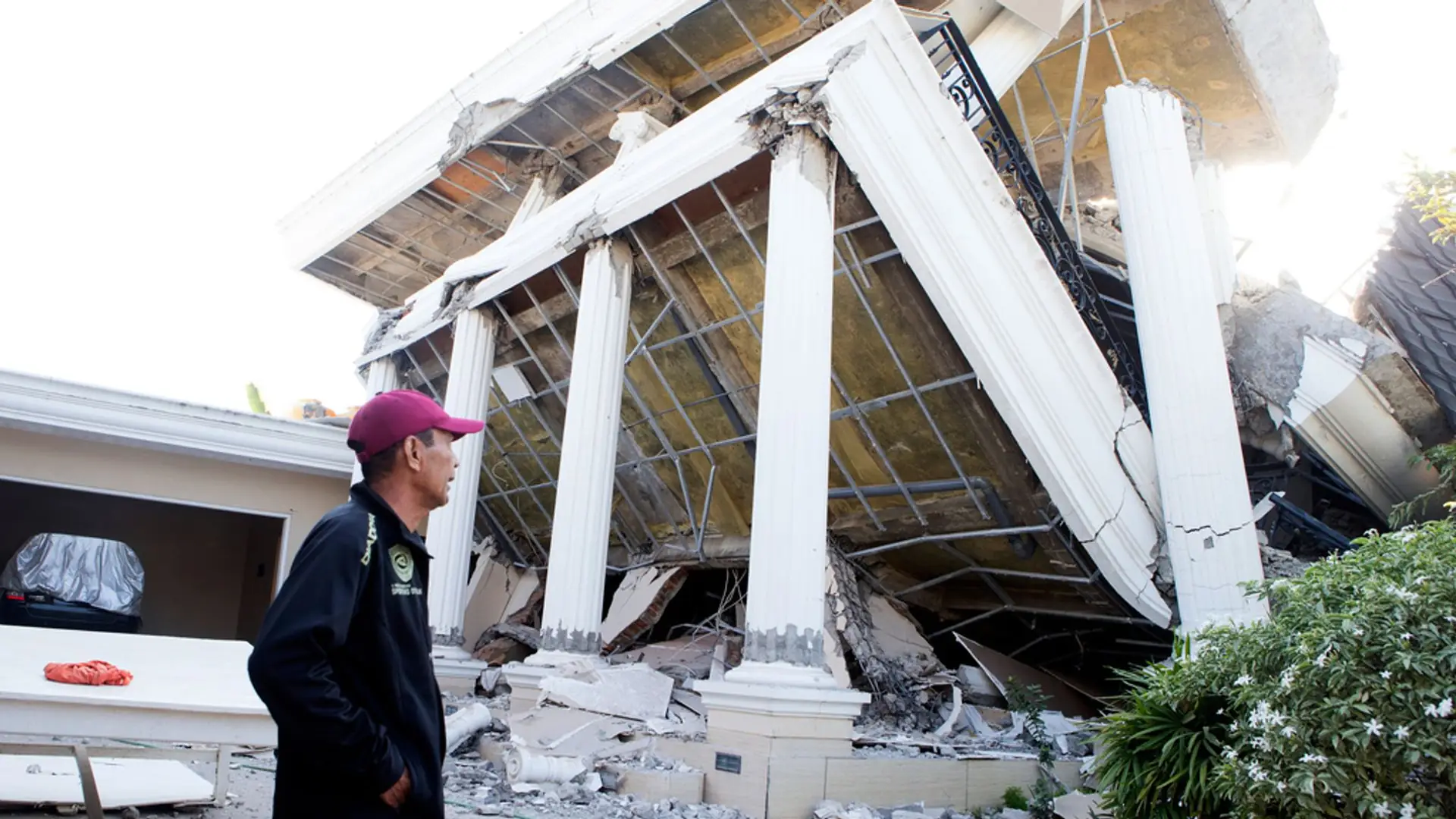
At 5:58 on the morning of Saturday 15 August, a magnitude 7.7 earthquake ruptured the seabed off the north coast of Flores. It was shallow, and it was close — and across seven regencies, walls came down while families were still asleep.
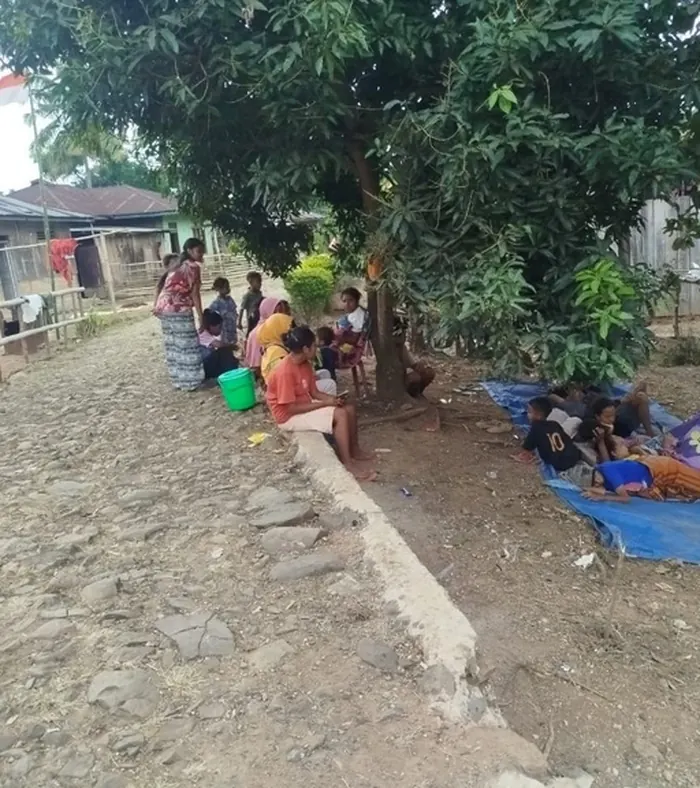
By the morning of 26 August, more than 7,400 aftershocks had been recorded — 143 of them strong enough to be felt, the largest at magnitude 6.2. Indonesia's geophysics agency says the rate is beginning to decline, but still expects the sequence to run for another three to four weeks. That is why people are still sleeping in open ground — not because every home has fallen, but because nobody yet knows which walls will hold.
The hardest-hit regency is Manggarai, in the island's western highlands. Its capital, Ruteng, sits at nearly 1,200 metres — one of the coldest towns in Indonesia. Families are spending those nights on bare ground, without mattresses, without blankets.
And this landed on a province already short of water. East Nusa Tenggara is Indonesia's most water-scarce province, in the middle of its dry season and an ongoing drought. Damaged pipes and wells have taken away what little supply there was.
Indonesia's national disaster agency has said plainly that the basic needs of displaced families are not yet met — naming family tents, community kitchens, health services and medical staff as the outstanding gaps. That is the list our teams are working against.
By 25 August the national tally had reached 24,597 homes severely damaged and nearly 78,000 damaged in all, alongside 237 health facilities and 804 schools. The buildings a community leans on in a crisis are themselves part of the crisis.
On 19 August our team opened its main relief post in Nagekeo — on ground the residents themselves gave us, and helped us build. One of them put it plainly: from the residents, for the residents.
It is a community kitchen now. That same day our staff bought eggs and vegetables at the local market, cooked, and carried the first hot meal packs out to families sheltering in the camps.
That is one post, in one regency. The plan our assessment set out — community kitchens, food packages, clean water, hygiene kits, emergency shelter, and medical and psychosocial care — has to reach across seven, prioritising the villages that landslides have cut off from the main roads.
What stands between that plan and a family eating tonight is funding. Every contribution goes straight into it.
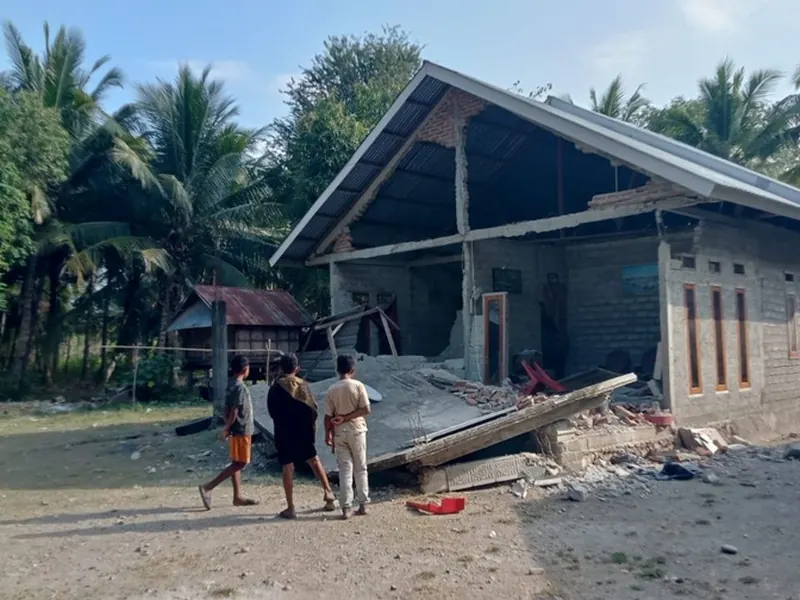
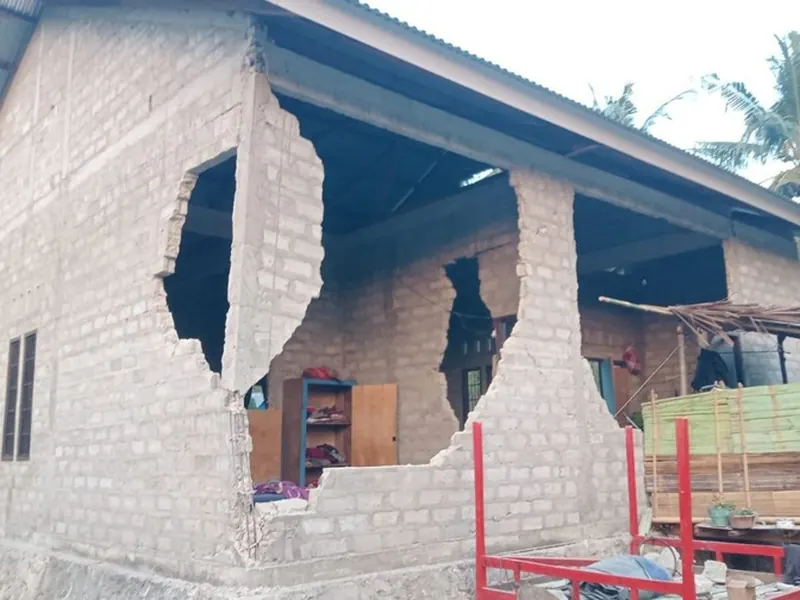
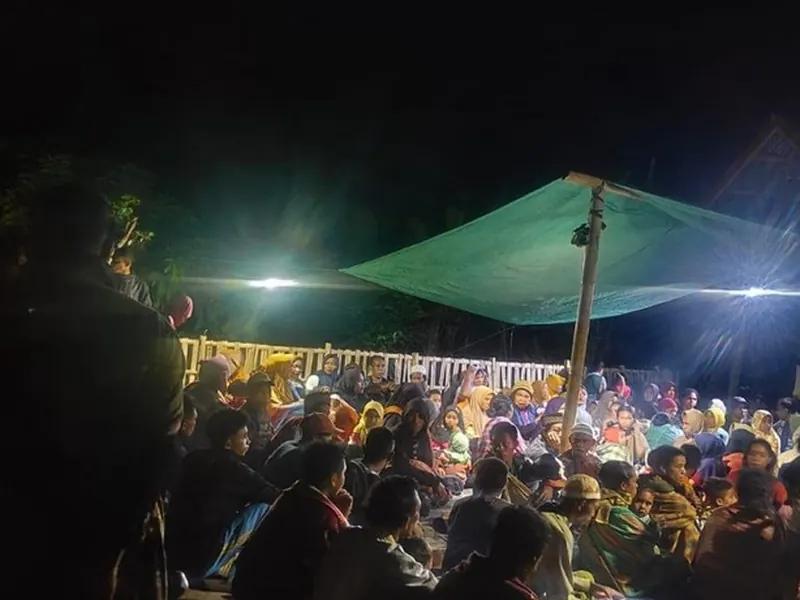
Flores, East Nusa Tenggara — August 2026.
Six areas of response, set out in MyFundAction's own field assessment: life-saving assistance now, and early recovery support as families begin to rebuild. Priority goes to vulnerable communities and to the places hardest to reach.
Ready-to-eat meals cooked on site and served directly to displaced families — the fastest way to feed people who have no kitchen to go back to.
Cooked and served daily
Rice, eggs, sardines, sugar, cooking oil, salt, soy sauce, tea and biscuits — enough to cover a family's needs for two weeks.
Two weeks per family
Water trucked to displacement sites in a province that was already the driest in Indonesia before the earthquake damaged its wells and pipes.
8,000 litres per delivery
Soap, toothpaste, shampoo and masks. Unglamorous, and the first line of defence against disease spreading through crowded shelters.
One kit per household
Shelter and household supplies for families whose homes are damaged, unsafe, or still shaking too hard to re-enter.
24,597 homes severely damaged
Medical teams, health checks and medicines — alongside psychosocial support, because 237 health facilities across the province were damaged and children have now lived through a week of unbroken aftershocks.
300 people per medical team
Every item here is priced from MyFundAction's own assessment in Flores, and bought locally in Indonesia.
The rebuilding will outlast the headlines. Choose “Monthly” in the secure checkout and your support carries into the recovery, not just the emergency.
“And whoever saves one — it is as if he had saved all of mankind.”
Qur'an 5:32
Figures from Indonesia's National Disaster Management Agency (BNPB). An earthquake response moves quickly, so every number here is dated — and we will keep it current rather than leave a stale figure in place.
Casualty and displacement figures: BNPB, 25 August 2026, 16:00 WIB. Deaths recorded across seven regencies on Flores. Aftershock count: BMKG, 26 August 2026.
Photos from our team in Flores — Nagekeo, East Nusa Tenggara, August 2026.
Sources: BNPB (Indonesia's National Disaster Management Agency) and BMKG (Meteorology, Climatology and Geophysics Agency). Figures are provisional and still moving — the death toll continues to rise as severely injured patients die in hospital, and displacement was still increasing at the latest count. An emergency response is under way across the affected regencies.
MyFundAction has worked across Indonesia since 2014, through MyFundAction Indonesia and its own local teams. That is why we were able to assess Flores in the first days rather than the first month, and why relief is bought and cooked locally rather than shipped in.
Our field assessment set out six areas of response — community kitchens, food packages, clean water, hygiene, emergency shelter, and medical and psychosocial care — with priority given to vulnerable communities and to villages that landslides have cut off from the main roads.
Established local teams, not a response assembled from scratch after the news broke.
Landslides have isolated communities in the mountains. Those are the hardest to reach and the ones most often missed.
Our own team films each stage in Flores — the post, the kitchen, the market run, the packs and who received them. The photographs above are theirs.
The aftershocks are expected to continue for weeks, and until they ease, going indoors isn't a choice people can safely make. Shelter, warmth and clean water are what change that — and our team is already there to deliver them.
Secure checkout · one-off or monthly · Apple Pay, Google Pay and card accepted